

Professional Selenium script development
To implement efficient web automation on Square Cloud, it’s essential to establish a proper development environment and follow configuration best practices.Essential technical prerequisites
- Python and pip: Make sure you have Python and pip installed on your system. If you don’t have them, download from the official Python website and the official Pip website.
- Square Cloud Account: Create your account through the signup page, using your email address for registration.
- Active plan: An active plan is necessary to ensure adequate resources for running Selenium applications. Check our available plans and choose the most suitable for your needs.
Selenium environment configuration
With Python and pip installed, proceed with creating the Selenium script. First, install the Selenium library:Terminal
main.py) and add the following code to implement a basic Selenium script:
main.py
Dependency management with requirements.txt
Therequirements.txt file is an essential component that lists all external libraries needed for your project. It’s crucial to include all dependencies used, excluding native Python libraries like random and datetime. This file should be included when submitting your application to Square Cloud.
requirements.txt
Chromium path configuration
In the implementation presented above, it’s not necessary to explicitly define the Chromium path, as the Selenium WebDriver can automatically locate the browser when installed in a standard system location. The ChromeDriver, specified withService('/usr/bin/chromedriver'), has knowledge about where to locate the Chromium/Chrome executable.
Square Cloud architecture
On Square Cloud, Chromium is installed at/usr/bin/chromium, which is the standard system location. Therefore, the Selenium WebDriver can locate it automatically through the specified ChromeDriver. Thus, there’s no need to explicitly specify the Chromium path in the code, unless there are specific reasons to do so, such as custom installations or different environment configurations.
Square Cloud configuration file
Create asquarecloud.app file at the root of your project, next to main.py. It tells Square Cloud how to run your script:
squarecloud.app
MEMORYis the RAM in MB. Chromium is memory hungry, so give it at least 1024 MB and raise it if the application stops withLACK_OF_RAM.AUTORESTART=truestarts the script again if it crashes. See how auto restart works.- There is no
SUBDOMAIN: the script doesn’t serve web pages.
main.py, requirements.txt and squarecloud.app.
Learn about: how to create the configuration file for Square Cloud.
The squarecloud.app file is an essential configuration file that will be used to configure your application on Square Cloud. It defines name, description, version, main file, among other fundamental configurations.
Project upload to Square Cloud
After preparing all project files, proceed with uploading to Square Cloud and host your application professionally.Via dashboard
1
Access the Upload Page
Access the upload page and upload your project zip file.
2
Configure Your Environment
After uploading your zip, you will need to configure the name, main file or runtime environment and other settings for your project.
If you are uploading a web project, make sure to select “Web Publication” and set a subdomain to your project.
If you are uploading a web project, make sure to select “Web Publication” and set a subdomain to your project.
3
Deploy Your Project
Finally, click on the “Deploy” button to host your project on Square Cloud.
After deployment, you can monitor your project’s status and logs from the dashboard.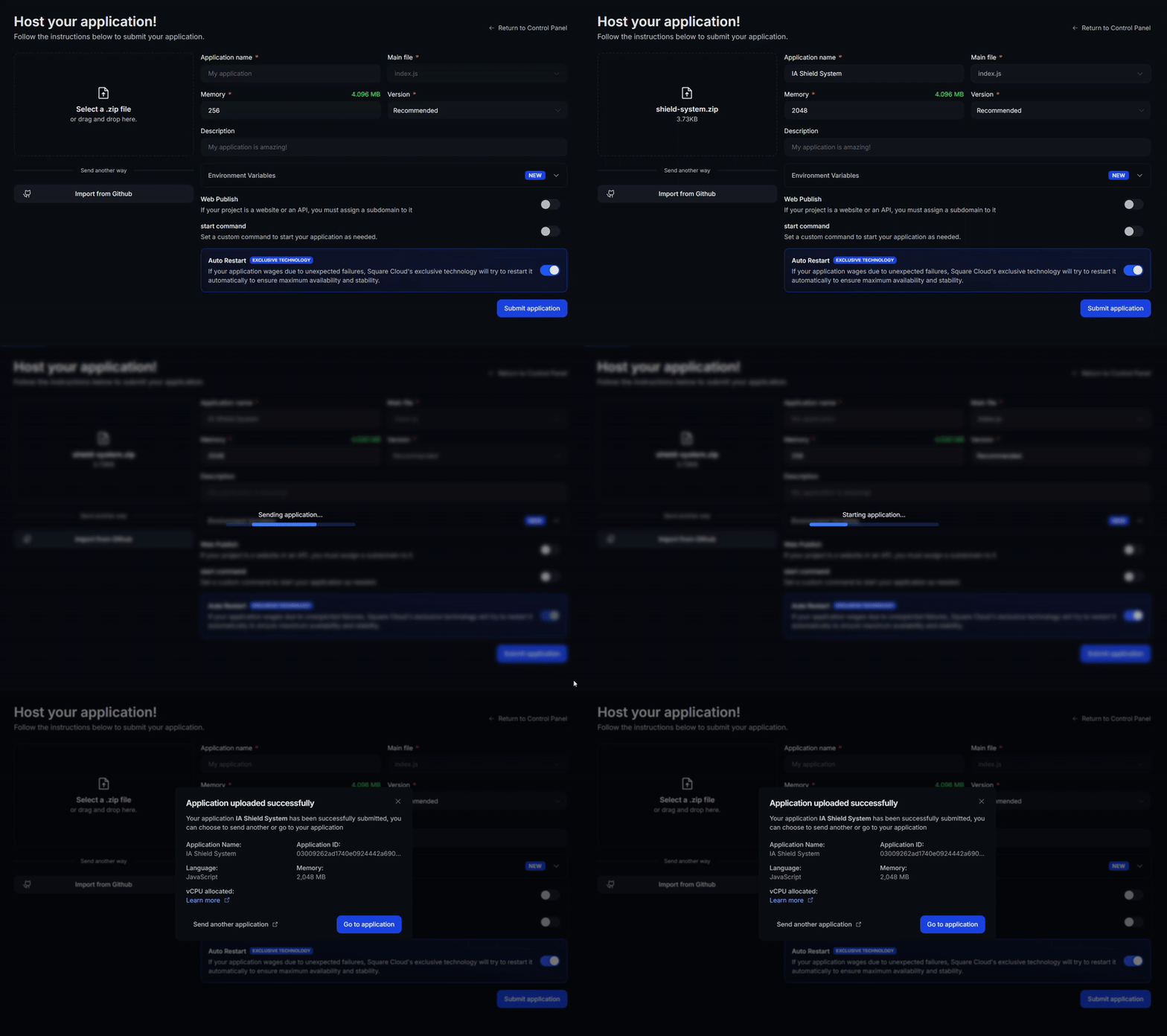
After deployment, you can monitor your project’s status and logs from the dashboard.
4
Confirm Your App Is Live
Your first deploy usually takes less than a minute. In the dashboard, wait for your application status to show as running and check the logs for any startup errors.
If you deployed a website or API, open
If you deployed a website or API, open
https://<your-subdomain>.squareweb.app in your browser: you should see your application responding. If you deployed a bot, send it a command to confirm it is online.
Via CLI
To use this method, your project needs a configuration file namedsquarecloud.app at its root. It tells Square Cloud how to run your application.
Configuration file guide
Learn how to create the
squarecloud.app configuration file that defines your application’s environment.1
Install the CLI
Install the Square Cloud CLI. If you already have it, run the same command to update it:
2
Log In
Run the command below. It opens your browser: approve the login there and the CLI is ready. There is no API key to copy. For scripts and CI, see CLI authentication.
3
Upload Your Project
From your project folder, run the command below. The CLI zips the current folder, leaving out what To upload a zip you created yourself, pass it with
squarecloud.ignore lists, and uploads it:--file:4
Confirm Your App Is Live
Your first deploy usually takes less than a minute. Check your application status and logs directly from the terminal:If you deployed a website or API, open
https://<your-subdomain>.squareweb.app in your browser: you should see your application responding. If you deployed a bot, send it a command to confirm it is online.
Additional resources and documentation
For more detailed information about Selenium and its advanced tools, visit the official Selenium documentation. There you’ll find detailed technical guides, specialized tutorials, and complete API documentation to maximize the use of Selenium functionalities.Next steps
App won't start
Fix LACK_OF_RAM, missing modules and other startup failures.
Python runtime
How Square Cloud runs Python applications.
Environment variables
Keep logins and API keys used by your automation out of your code.